 Yes, click here to follow me at your own risk. The cartoon says it all! :-)
Showing posts with label british author. Show all posts
Showing posts with label british author. Show all posts
Thursday, November 19, 2009
Follow Me...at your own risk!
Yes, click here to follow me at your own risk. The cartoon says it all! :-)

Wednesday, November 4, 2009
'Twitter lists' expand author networks!

Twitter recently launched a lists function, which will help users separate followers into categories that other Tweeters can follow with the touch of a button.
Mashable wrote an article about Twitter lists (still in Beta) in mid-October. Twitter announced the move in a blog post in September.
When I first started exploring the lists function today, I thought it would be a terrific tool to meet new authors, publicists and publishers, and others who have similar political views as myself.
After working with it a while, though, I wasn't sure just how it would fit into my daily Twitter life. There are some highlights - and functionality that could help authors with Internet promotions. There are also some drawbacks.
Pros:
When I logged on today, I found myself already on 14 lists. By the end of the day, it was nearly 20. I went to each of the lists to see who thought I was cool enough to add. Then, I made sure I followed them. I also checked out the others on the list and added those I liked to my own network. I may not have found these contacts otherwise.
The most lists you are on, the broader your network. That means more people can find you. This works for me well, as I want to expand my network, particularly with authors and publicists.
It is terrific at sorting tweets. As with some third-party applications, you can group your followers into categories. You click on each category for a limited list of Tweets just from these folks. This is much more manageable than the current @replies system.
Lists have their own URL, so you can share these on your blogs and Web sites to direct readers to your favorite Twitter users. For example, a paranormal romance author could create a list of other authors in the genre and share it with readers.
On the flip side, you can see which other authors link to you in lists. This will give you a good idea of different readers to target with marketing efforts.
Cons:
As with most things new to Twitter, the function is not user-friendly. It takes a LONG time to add folks to one list. I don't have hours to create lists; I have minutes. Twitter needs to devise a way to make it easier to sort through followers and categorize them appropriately - especially those with several thousand.
If you already sort your followers on Twitter programs like TweetDeck, this may be too little, too late. However, it is worth a look if you visit the actual site daily, rather than access it via a third-party application.
It appears that you can be put on a list without actually following, or being followed. That could lead to some issues for authors who have a very strict genre brand.
As with anything, the most lists you have, the more Tweets you check. I have several lists already and, of course, will want to check them. I will also want to check out the new lists I am on, just to see who likes my stuff.
Have you used the new Twitter list function? If so, what are your thoughts? How does this function compare with those in third-party applications?
--
Get added to my list! If you would like to be part of my authors and books list, leave a comment with your Twitter handle. I will add you to my personal books list, as well as one for @marketmynovel. Thanks!
Market My Novel
Ask Angela
Sunday, October 18, 2009
From Gambit: Where was the Paul Morphy Chess Club?
 WHERE WAS THE PAUL MORPHY CHESS CLUB?
Blake Pontchartrain
Hey Blake,
Ronnie Virgets wrote a wonderful column on the history of Paul Morphy. My question is: where was the Paul Morphy Chess Club? I can remember an uncle of mine speaking of it often as a place where men met for lunch, cards and cigars.
Kenny Mayer
Dear Kenny,
Virgets' story ("Chairman of the Board," News Views, May 6, 2008) about our local chess genius who died in 1884 at age 47 was excellent.
Morphy was the first great American-born chess player. He traveled to Europe in the 1850s, defeating all challengers except the English champion of the time, Howard Staunton, who refused to play him. Morphy, however, still was hailed as the chess champion of the world.
Paul Morphy Chess Club in New Orleans had several locations, the first in the Balter Building, in the block surrounded by Commercial Place, Camp Street, and St. Charles and Poydras avenues. The last was at 316 St. Charles Ave.
The club was organized in May 1928, when several chess-playing gentlemen agreed to form a new club devoted exclusively to the game. Members were solicited, and the club soon had officers and a charter. New members decided to name the club after the local chess master they so revered. The club opened its doors to members for play on June 22, 1928, Paul Morphy's birthday. There is no longer a chess club by this name in New Orleans, but there are several in America, and there's even a Paul Morphy Chess Club in Sri Lanka.
An earlier group called New Orleans Chess Club was founded in 1841, but it languished due to lack of interest. Later, many New Orleanians became interested in the game when young Paul Morphy burst on the scene. By the mid-1850s, the club sponsored weekly tournaments and membership increased rapidly. Morphy himself was elected president of the club in 1865. Earlier, when Morphy went to Europe in June 1858, the New Orleans Chess Club offered to pay his way. Morphy declined because he did not want to be considered a professional chess player.
Another famous club in the Crescent City was the New Orleans Chess, Checkers and Whist Club. This organization was founded in 1880, shortly before Morphy's death. The club first met in July in a room at 128 Gravier St. There were 27 members. It was an immediate success and membership grew rapidly. New quarters had to be found, so the group relocated to Common Street and then to a three-story building at the corner of Canal and Baronne streets.
Then disaster struck: A fire in 1890 burned the building to the ground. Lost in the fire was invaluable Morphy memorabilia. The owner of the structure agreed to rebuild, and soon the club was re-established in comfortable surroundings on the third floor. At this point, there were more than 1,100 members.
In 1920, another move brought the club to 120 Baronne St., where the men played various games in splendor. It occupied four floors in a large building, which had many rooms for games, as well as dining rooms, a billiard hall, a library and bedrooms for men who lived at the club.
It was after the death of Judge Leon Labatt - a strong supporter and member of the New Orleans Chess, Checkers and Whist Club - and a number of resignations that the members decided to form a new group: the Paul Morphy Chess Club.
Morphy retired from chess long before his death. He played absolutely no games of chess with anyone after 1869.
--
To read my chess novel about Paul Morphy's life, please see this link.
Wednesday, October 14, 2009
Chess Book of the Year, Part 3

Ronan Bennett & Daniel King
Tuesday October 13 2009
The Guardian
--
Gligoric-Nikolic, Novi Sad 1982. Black to play. Who stands better?
RB Our third shortlisted book for the Guardian Chess Book of the Year award is Winning Chess Middlegames by Ivan Sokolov (New in Chess, GBP 24.95). Like our first shortlisted title, Chess Strategy for Club Players by Herman Grooten, Sokolov's book focuses on the middlegame, but whereas Grooten emphasises the dynamic aspects of the game, here the stress is on pawn structure. In an introduction Michael Adams makes the point that we often learn opening lines without giving serious thought to the kind of pawn structures they create.
Sokolov arranges his material into four different types of pawn structure: doubled pawns; isolated pawns; parallel hanging pawns in the centre; and pawn majority in the centre, further dividing these into subgroups. He then analyses the structures with reference to the opening. Chapter 1, for example, deals with doubled pawns arising mainly from the Nimzo. Chapter 2, on isolated pawns, looks predominantly at lines in the Queen's Gambit Declined. The essential point - but one often overlooked - is that from the opening we should be able to anticipate the structure of the middlegame.
The diagram position arose out of a Nimzo (H?bner Variation), with the characteristic doubled pawns on c3 and c4. White has tried to exploit the semi-open b-file to create threats against the enemy king. His rooks are doubled, the bishop is on b5, and the queen lurks on a3. On the other wing, Black's pawns are advancing, supported by the rooks. Who stands better?
Fritz assesses the position as roughly equal. But Sokolov is unequivocal: "A sorry sight. On the queenside White is not able to create a single threat, while on the other side of the board the battle is lost." The computer is wrong. White is dead lost. After Black's simple defensive expedient 1...Na6-b8, the game continued 2 Nf1 g4 3 f4 exf4 4 Bxf4 Ng6 5 Rf2 h4 and the pawns quickly smashed the white king's position.
--guardian.co.uk Copyright (c) Guardian News and Media Limited. 2009
Friday, October 2, 2009
Karpov-Kasparov, KK2 16th match game, 1985
Ronan Bennett
Thursday November 13 2008
The Guardian
Thursday November 13 2008
The Guardian
http://www.guardian.co.uk/sport/2008/nov/13/chess-karpov-kasparov
Karpov-Kasparov, KK2 16th match game, 1985. Black to play and win.
Four titles made it to our chess book of the year shortlist: 100 Endgames You Must Know by Jesus de la Villa; Forcing Chess Moves by Charles Hertan; From London to Elista by Evgeny Bareev and Ilya Levitov; and Modern Chess: Part 2 Kasparov vs Karpov 1975-1985 by Garry Kasparov. Once again we drafted in Guardian chess club stalwarts Sean Ingle and Stephen Moss to help with the judging.
We all admired 100 Endgames for its clarity and practical value but, in Ingle's estimation, it lacked pizzazz (which, to be fair, is asking a lot of a manual on endgames). Forcing Chess Moves, which has featured in this column several times, was also well liked, but in the end it was also considered a little too much like a workbook.
From London to Elista is definitely a book rather than a manual, and Bareev's contributions are particularly impressive. But even this fine book has to give way to our winner ? Modern Chess: Part 2. As Moss observed: "Kasparov had a monumental career and with this series of books he is creating a monument to it." Some will balk at the ?30 price, but the great games, detailed analysis, compelling narrative and the insights into the psychological and political dimension to the struggle over the board make it an outstanding contribution to chess literature.
This week's position is from the brilliant 16th match game of Kasparov and Karpov's second titanic encounter. Kasparov's play is, interestingly, more like Karpov's in that it is positional and tight. On move 16, he succeeds in planting a knight on d3, dominating Karpov's position. Move by move, Kasparov gradually restricts his great opponent, bringing him in the middlegame to virtual zugzwang, quite an achievement with so many pieces on the board. On move 34, to get rid of the terrible knight, Karpov is forced to give up his queen for three minor pieces ? not a terrible exchange in strictly material terms, except that Black now played 37...Rc1, and after 38 Nb2 Qf2 39 Nd2 Rxd1+ 40 Nxd1 Re1+ Karpov resigned because of 41 Nf1 Rxf1 42 Bxf1 Qxf1 mate.
--guardian.co.uk Copyright (c) Guardian News and Media Limited. 2009
Friday, September 4, 2009

Tuesday, June 30, 2009
Monday, March 9, 2009
Subscribe to:
Posts (Atom)
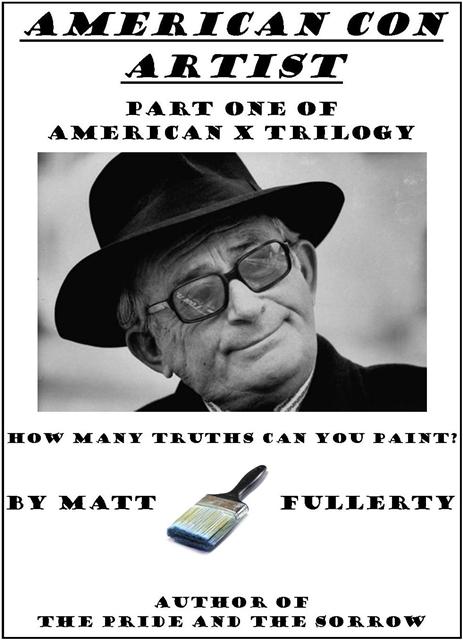
My novel about painting, criminality, and the greatest art forger of the twentieth century!
cropped.jpg)
Please click the cover!
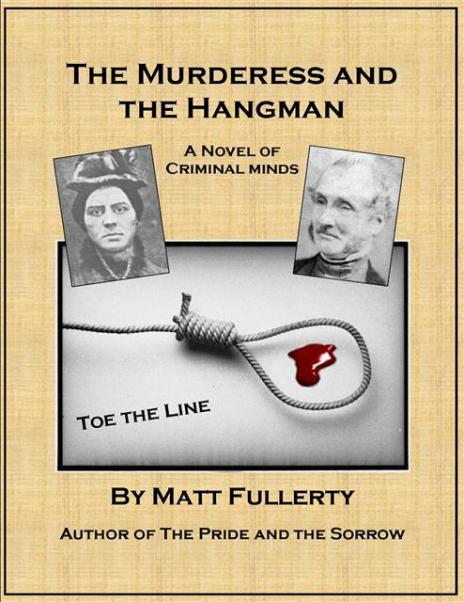
My novel about London, murder, mayhem, and a female killer!
.jpg)
Please click the cover!
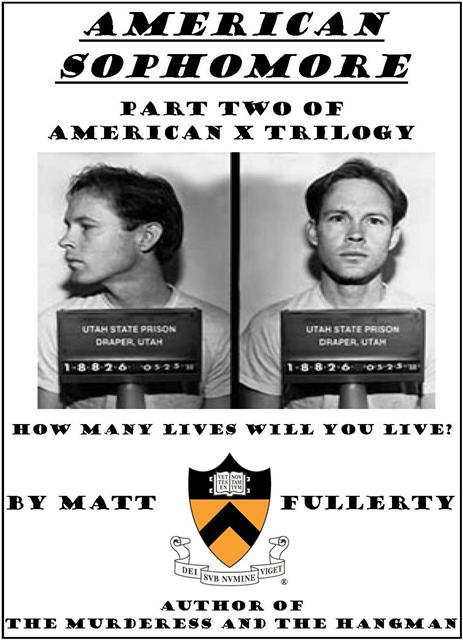
My novel about running, Princeton University, and a conman who lost it all!
cropped.jpg)
Please click the cover!
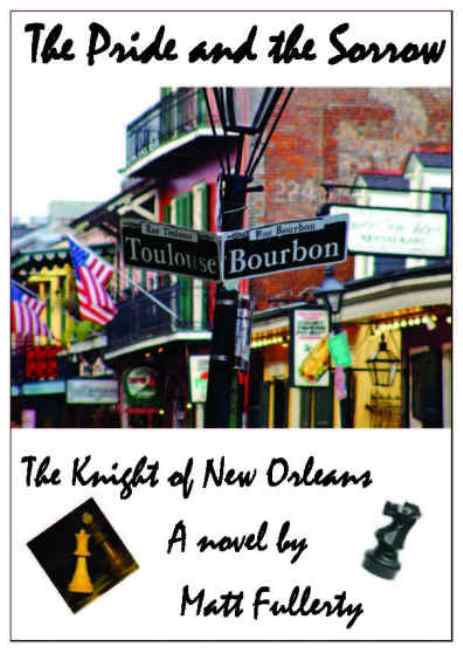
My novel about love, betrayal and chess in New Orleans
2.jpg)
Please click the book!
My semi-autobiographical novel about a very British education and becoming an American!
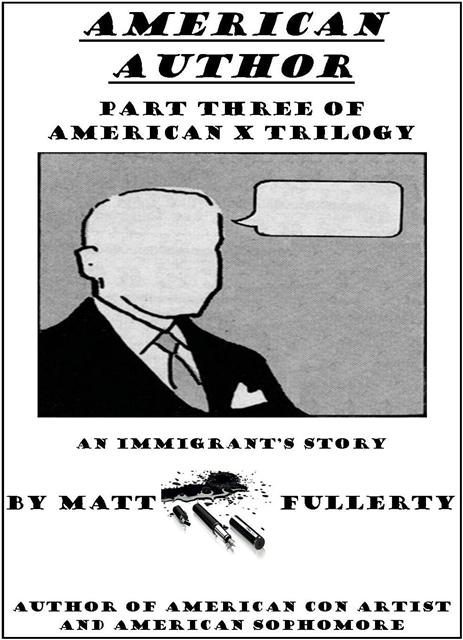Cropped.jpg)
Please click the cover!
My novel about London, murder, mayhem, and a female killer!
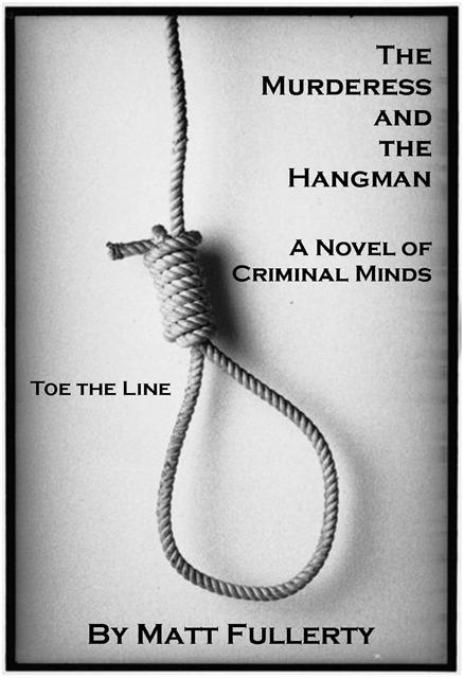cropped.jpg)
Please click the cover!

4.jpg)

